Burger Line Art: Practical Design Applications
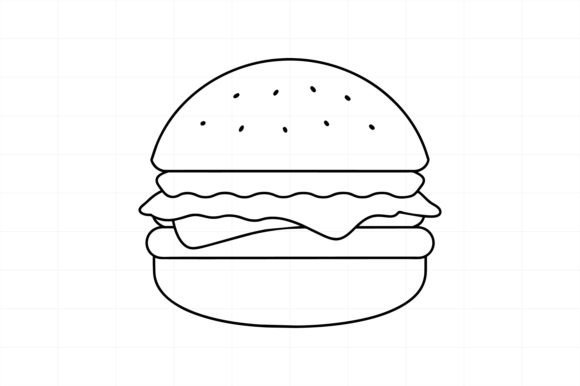
In the crowded landscape of food marketing and culinary branding, clarity often outperforms complexity. Burger line art illustration has emerged as a strategic visual tool for professionals who need to communicate appetite and quality without the visual noise of hyper-realistic photography or heavy shading. This minimalist style strips the subject down to its essential contours, creating a versatile graphic asset that functions across digital menus, packaging, editorial content, and social media. For marketers, designers, and small business owners, understanding the specific utility of this aesthetic is crucial for making informed creative decisions that drive engagement and streamline production workflows.
The Strategic Value of Minimalist Food Graphics
The primary advantage of burger line art lies in its cognitive efficiency. When a viewer encounters a detailed photograph of a burger, their brain processes texture, lighting, color grading, and background elements before recognizing the product itself. Line art bypasses this processing lag. By utilizing negative space and confident stroke weights, these illustrations deliver immediate recognition. This speed of comprehension is particularly valuable in user interface design and mobile applications where screen real estate is limited and user attention spans are short.
For restaurant operators and app developers, this translates to improved navigation and faster decision-making for customers. A clean line icon representing a "Spicy Chicken Burger" or "Classic Cheeseburger" allows users to scan a digital menu rapidly, reducing friction in the ordering process. Unlike photography, which can suffer from poor lighting or inconsistent styling, line art maintains perfect visual consistency across an entire menu category. This uniformity strengthens brand identity and creates a cohesive user experience that feels professional and intentional rather than haphazard.
Enhancing Brand Versatility and Scalability
One of the most practical benefits for entrepreneurs and publishers is the inherent scalability of vector-based line art. A high-resolution photo of a burger may look stunning on a desktop website but can become muddy or unrecognizable when scaled down for a favicon, app icon, or receipt header. Burger line art illustration retains its integrity at any size. The absence of complex gradients and textures means the image remains crisp whether it is printed on a massive storefront banner or embroidered onto staff uniforms.
This versatility extends to merchandise and collateral production. Small business owners often operate with tight budgets and cannot afford separate design assets for every touchpoint. A single, well-crafted line art asset can be repurposed for:
- Packaging Design: Stamped onto kraft paper bags or boxes where full-color printing is cost-prohibitive.
- Social Media Templates: Used as recurring visual motifs in Instagram stories or TikTok overlays without competing with video content.
- Editorial Layouts: Integrated into blog posts or cookbooks as section breakers that add visual interest without dominating the text.
- Environmental Signage: Applied to window decals or chalkboard menus where simplicity aids readability from a distance.
By investing in this style, creators build a flexible visual library that adapts to various contexts without requiring constant redesign or re-photography.
Streamlining Production and Reducing Costs
Food photography is resource-intensive. It requires professional lighting, food stylists, prop sourcing, and extensive post-production retouching to make a burger look appetizing. Furthermore, physical ingredients change seasonally, and supply chain issues can render existing photos inaccurate. Burger line art illustration offers a sustainable alternative that decouples marketing assets from physical inventory constraints.
For freelancers and agencies managing multiple food clients, this style significantly reduces turnaround times. Creating a custom line illustration is often faster and more predictable than scheduling a photo shoot. Updates are equally efficient; if a client changes their burger recipe to include pickles instead of onions, a designer can modify the vector path in minutes. In contrast, updating a photograph would require reshooting the entire dish. This agility supports dynamic marketing strategies where speed-to-market is a competitive advantage.
Supporting Dietary Transparency and Inclusivity
Modern consumers demand transparency regarding ingredients and dietary restrictions. Photography can sometimes obscure these details; a plant-based patty might look identical to a beef patty in a stylized photo, leading to customer confusion or dissatisfaction. Line art allows for deliberate visual coding that communicates specific attributes clearly.
Designers can use distinct line styles or accompanying symbolic elements to differentiate products instantly. A double-line stroke might indicate a premium item, while a leaf motif integrated into the bun outline signals a vegan option. This visual shorthand helps educators, nutritionists, and health-focused brands communicate complex dietary information accessibly. It reduces the cognitive load on consumers with allergies or ethical dietary restrictions, fostering trust and improving the overall customer experience. When accuracy matters more than indulgence, illustration often communicates more effectively than realism.
Navigating Style Limitations and Fit Considerations
While burger line art illustration offers significant operational benefits, it is not a universal solution. Professionals must assess whether this aesthetic aligns with their specific goals and audience expectations. There are scenarios where minimalism may work against you.
If the primary marketing objective is to trigger a visceral hunger response through sensory cues like melting cheese, glistening grease, or char marks, line art may fall short. These tactile sensations are inherently tied to color and texture, which line art abstracts away. Fast food chains relying on impulse purchases driven by appetite appeal typically benefit more from high-saturation photography. Similarly, luxury dining establishments aiming to convey opulence and artisanal craftsmanship might find line art too casual or utilitarian for their brand positioning.
Additionally, the quality of execution matters immensely. Poorly drawn line art can look amateurish or generic. The difference between a sophisticated illustration and a clip-art stereotype lies in the understanding of form, weight distribution, and negative space. When commissioning or creating these assets, prioritize anatomical accuracy of the food structure even within a simplified style. A burger that looks structurally unsound or proportionally incorrect will undermine credibility regardless of how clean the lines are.
Integrating Line Art into Broader Visual Systems
To maximize value, treat burger line art as part of a holistic design system rather than isolated decorations. Consistency in stroke width, corner radius, and level of detail is essential when building a suite of food icons. Mixing thick, rounded lines for burgers with thin, sharp lines for drinks creates visual dissonance that weakens brand perception.
Consider how the illustrations interact with typography and color palettes. Line art provides excellent contrast against bold typefaces and solid color blocks, making it ideal for poster designs and web headers. However, it may struggle against busy photographic backgrounds or intricate patterns. Testing assets in their intended environment before finalizing production prevents costly revisions.
For content creators and bloggers, pairing line art with descriptive copy creates a balanced layout. The illustration serves as an anchor point that breaks up text, while the writing provides the sensory details the image omits. This symbiotic relationship leverages the strengths of both mediums: the instant recognition of graphics and the evocative power of language.
Making Informed Creative Decisions
Ultimately, the decision to utilize burger line art illustration should be driven by functional requirements rather than trend chasing. Evaluate your specific use case against the following criteria:
- Reproduction Context: Will the asset be used across multiple sizes and print methods? If yes, line art is likely superior.
- Update Frequency: Do menu items change often? If yes, illustration offers greater long-term efficiency.
- Communication Goal: Is the priority quick identification or sensory indulgence? Identification favors line art; indulgence favors photography.
- Budget and Timeline: Are resources limited? Line art generally offers a lower barrier to entry and faster iteration cycles.
By approaching burger line art as a strategic communication tool rather than merely a stylistic choice, professionals can unlock tangible benefits in efficiency, clarity, and brand consistency. Whether you are designing a mobile ordering platform, creating educational nutrition materials, or branding a sustainable food startup, this versatile medium offers practical solutions to common visual challenges. The key lies in thoughtful application, ensuring that every line serves a purpose and contributes to a clearer, more effective message for your audience.