Understanding the Dragonfly: Nature’s Master Engineer and Its Impact on Modern Life
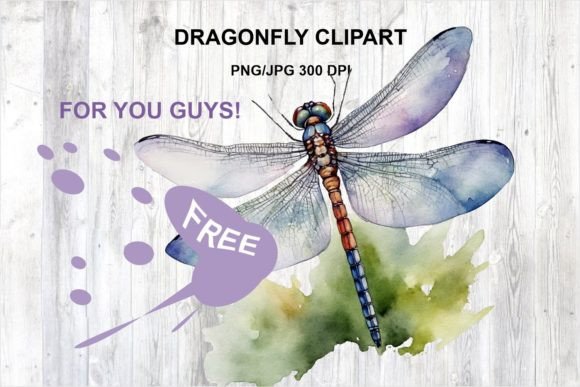
When most people spot a dragonfly hovering over a pond or darting through a garden, they see a fleeting moment of natural beauty. These ancient insects, with their iridescent wings and jewel-toned bodies, have captivated human imagination for centuries. However, to view the dragonfly merely as an ornamental creature is to overlook one of nature’s most sophisticated biological machines. From an evolutionary perspective, the dragonfly is a masterclass in aerodynamic efficiency, sensory processing, and ecological balance. Understanding this insect requires looking beyond its aesthetic appeal to appreciate the complex engineering and environmental significance that define its existence.
For general readers, students, and professionals alike, the study of dragonflies offers profound insights into biology, technology, and environmental health. Whether you are a gardener seeking natural pest control, an engineer studying flight dynamics, or simply a curious observer of the natural world, the dragonfly serves as a perfect entry point into understanding how specialized adaptations allow species to thrive for millions of years.
The Evolutionary Success of an Ancient Predator
To understand the dragonfly’s current role in our ecosystem, we must first understand its history. Dragonflies belong to the order Odonata, a group that dates back approximately 300 million years to the Carboniferous period. This makes them older than dinosaurs and among the first winged insects to evolve. Their longevity is not an accident; it is the result of highly successful adaptations that have remained relevant through multiple mass extinctions.
Unlike many insects that have evolved toward specialization in narrow niches, dragonflies have maintained a generalized predatory strategy that remains effective today. Their success lies in their physical perfection. They possess two pairs of strong, transparent wings that can move independently of one another. This independence allows for unparalleled maneuverability. A dragonfly can fly straight up, straight down, hover like a helicopter, and even fly backward. This level of control is achieved through direct muscle attachment to the wings, a mechanism distinct from the indirect flight muscles found in bees or flies.
Sensory Processing and Hunting Efficiency
The dragonfly’s reputation as an apex aerial predator is well-earned. Research indicates that dragonflies have a hunting success rate of up to 95%, making them far more efficient hunters than lions or great white sharks. This efficiency is driven by exceptional sensory integration.
- Compound Vision: A dragonfly’s eyes cover nearly 360 degrees of its field of view. Each eye contains up to 30,000 individual lenses (ommatidia), providing a mosaic image that is incredibly sensitive to movement and polarized light.
- Predictive Tracking: Neurological studies suggest that dragonflies do not simply react to prey; they predict its trajectory. Their brains process visual information to calculate interception points, allowing them to ambush flying insects mid-air rather than chasing them from behind.
- Selective Attention: Despite having panoramic vision, dragonflies can focus attention on specific targets while ignoring background clutter, a cognitive feat that parallels advanced computer vision algorithms.
This combination of mechanical agility and neurological sophistication explains why the dragonfly has remained a dominant predator in freshwater ecosystems for eons.
Ecological Significance: Indicators and Regulators
Beyond their biological mechanics, dragonflies play a critical functional role in the environment. They serve two primary ecological purposes: population regulation and environmental indication.
Natural Pest Control Agents
In both their aquatic larval stage (nymph) and terrestrial adult stage, dragonflies are voracious carnivores. Adult dragonflies consume significant quantities of flying pests, including mosquitoes, gnats, midges, and agricultural crop pests. A single dragonfly can eat hundreds of mosquitoes in a day. For homeowners and farmers, maintaining healthy dragonfly populations is a form of free, sustainable pest management that reduces reliance on chemical pesticides.
Bioindicators of Water Quality
Perhaps the most significant practical relevance of dragonflies for environmental scientists and conservationists is their sensitivity to water quality. Dragonfly nymphs are aquatic and can spend anywhere from several months to five years underwater before emerging as adults. During this time, they breathe through gills and absorb substances directly from the water.
Because of this intimate connection to aquatic environments, dragonflies are excellent bioindicators. Different species have varying tolerances for pollution, sedimentation, and pH changes. The presence of sensitive species indicates pristine, oxygen-rich water, while their absence—or the dominance of only highly tolerant species—can signal degradation long before chemical tests might detect critical failures. Monitoring odonate diversity is therefore a standard practice in wetland assessment and restoration projects.
Biomimicry: What Engineering Learns from Dragonflies
The intersection of dragonfly biology and modern technology is one of the most exciting frontiers in biomimicry. Engineers and roboticists have spent decades attempting to replicate dragonfly flight because it solves problems that fixed-wing aircraft and quadcopters cannot.
Micro Air Vehicles (MAVs): As drone technology shrinks, traditional propeller designs become less efficient. Researchers are developing flapping-wing drones that mimic the independent wing motion of dragonflies to achieve superior stability in turbulent air and the ability to navigate confined spaces. These MAVs have potential applications in search and rescue, infrastructure inspection, and environmental monitoring.
Visual Navigation Systems: The dragonfly’s method of optical flow analysis—using visual cues to determine speed and distance without GPS—is inspiring new navigation systems for autonomous vehicles. By emulating how insect brains process motion parallax, engineers hope to create collision avoidance systems that are lighter, faster, and less energy-intensive than current LIDAR-based solutions.
Common Misunderstandings About Dragonflies
Despite their benefits, dragonflies are often subject to folklore and misconceptions that can hinder appreciation or lead to unnecessary fear. Clarifying these points is essential for building a broader public understanding.
- The "Snake Doctor" Myth: In various cultures, dragonflies are mistakenly believed to be poisonous or capable of stinging humans. This is entirely false. Dragonflies lack stingers and venom. They are harmless to people and pets, biting only if handled roughly, and even then, rarely breaking skin.
- Confusion with Damselflies: While closely related, damselflies are distinct. Generally, dragonflies hold their wings flat and perpendicular to their body at rest, while damselflies fold their wings back along their abdomen. Dragonflies also tend to be larger and more robust fliers.
- Lifespan Assumptions: Many assume dragonflies live only a day because adults are short-lived. In reality, the majority of a dragonfly's life is spent underwater as a nymph. The adult stage is merely the brief reproductive finale of a much longer lifecycle.
Integrating Dragonflies into Daily Life and Education
Understanding dragonflies is not purely academic; it has practical applications for daily living and education. For educators, the dragonfly lifecycle provides a tangible lesson in metamorphosis, ecology, and adaptation. Observing nymphs in a classroom aquarium demonstrates incomplete metamorphosis, contrasting sharply with the caterpillar-to-butterfly narrative most children know.
For gardeners and landowners, attracting dragonflies involves creating habitat rather than buying insects. This means preserving wetlands, avoiding pesticide use, and planting native vegetation near water sources. Leaving some emergent plants (like reeds and rushes) is crucial, as these provide perching spots for hunting and sites for egg-laying. By fostering these habitats, individuals contribute to local biodiversity and gain natural allies against nuisance insects.
The Broader Perspective: Respecting Ancient Complexity
Ultimately, the dragonfly teaches us about resilience and optimization. In a world increasingly focused on technological innovation, this insect reminds us that nature solved complex engineering challenges hundreds of millions of years ago. Its continued existence is a testament to the effectiveness of sustainable design.
Whether viewed through the lens of evolutionary biology, environmental science, robotics, or simple backyard observation, the dragonfly demands respect. It is a reminder that even the smallest creatures carry immense significance. By deepening our understanding of these remarkable insects, we not only enrich our own knowledge but also become better stewards of the delicate freshwater ecosystems upon which they—and ultimately we—depend. The next time a dragonfly crosses your path, recognize it not just as a bug, but as a living archive of Earth’s history and a blueprint for its future.