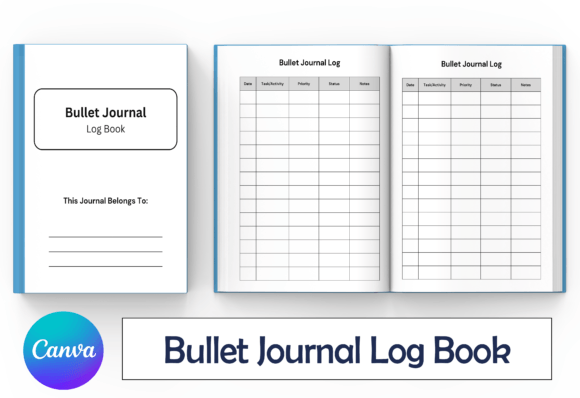
Bullet Journal Log Book: A Guide for Every User
The Bullet Journal log book is more than just a notebook with dots; it is a customizable analog system designed to track the past, organize the present, and plan for the future. At its core, this methodology combines a diary, to-do list, planner, and reflective journal into a single volume. However, the true value of a Bullet Journal log book lies in its adaptability. What serves as a chaotic creative outlet for an artist might function as a rigid project management tool for a software developer. Understanding how this system intersects with your specific lifestyle or profession is the first step toward making it a sustainable habit rather than a fleeting trend.
Divergent Needs Across Different Lifestyles
No two users approach blank pages with the same intent. While the foundational modules—index, future log, monthly log, and daily log—remain constant, the application shifts dramatically based on daily demands. Recognizing these differences prevents the common pitfall of adopting a system that looks beautiful on social media but fails in practice.
For Professionals and Entrepreneurs
Business owners and career-focused individuals often prioritize reliability and speed over aesthetics. For this demographic, a Bullet Journal log book acts as an external hard drive for the brain. The primary goal is cognitive offloading. Instead of spending twenty minutes decorating a header, a marketing manager might use rapid logging to capture meeting notes, delegate tasks, and track quarterly KPIs in real-time.
Evaluation criteria for professionals typically include:
- Paper Quality: Must handle fountain pens or markers without bleed-through during fast-paced note-taking.
- Durability: Hardcovers and lay-flat binding are essential for books that travel between offices, coffee shops, and client sites.
- Structure: Pre-printed indexes or page numbers save valuable setup time.
A freelancer might use the migration process to audit their workload weekly, ensuring that unpaid administrative tasks do not overshadow billable hours. Here, the log book is a productivity filter, not an art project.
Creators, Educators, and Hobbyists
In contrast, artists, teachers, and hobbyists often view the Bullet Journal log book through the lens of flexibility and expression. For an educator, the journal might serve as a hybrid lesson planner and student observation tracker. For a watercolor artist, it doubles as a sketchbook and color tester. In these contexts, the "messiness" of the system is a feature, not a bug.
This group tends to evaluate options based on:
- Texture and Weight: Heavier GSM paper is non-negotiable for mixed media use.
- Grid Size: Smaller dot grids (4mm vs 5mm) may be preferred for detailed sketches or precise lettering.
- Creative Freedom: Blank endpapers and unstructured layouts allow for non-linear thinking.
The learning value here is immense. By physically writing out lesson plans or tracking creative habits, educators and creators engage in active recall and mindfulness that digital apps rarely facilitate.
Evaluating Priorities: Finding Your Perfect Match
Selecting the right Bullet Journal log book requires honest self-assessment regarding your current skill level and long-term goals. A mismatch between user expectation and product reality is the leading cause of abandonment.
Beginners vs. Experienced Users
If you are new to the methodology, ease of use should be your primary metric. Beginners often feel intimidated by elaborate spreads seen online. Starting with a simpler, perhaps less expensive notebook reduces the pressure to create perfection. A basic dotted notebook allows you to learn the rhythm of migration and reflection without financial guilt if you miss a week.
Experienced users, conversely, often seek long-term usefulness and archival quality. Having mastered the basics, they may invest in premium brands known for consistent manufacturing. They understand that a higher upfront cost translates to a reference archive that lasts years. Their evaluation includes nuances like ribbon marker count, pocket folder inclusion, and binding tightness.
Commercial Value vs. Personal Utility
Content creators and influencers occupy a unique space where the Bullet Journal log book has both personal utility and commercial value. Presentation matters because the journal itself is part of the content. These users must balance functionality with visual appeal. They might prioritize cover design and brand alignment alongside standard performance metrics.
However, consumers using the system strictly for personal mental health or household management should disregard commercial trends entirely. If a minimalist black notebook helps you manage anxiety better than a pastel influencer edition, the minimalist choice is objectively superior for your needs.
Practical Examples of Adaptation
To visualize how priorities shift, consider these practical scenarios:
- The Small Business Owner: Uses a rugged, A5 log book to track inventory and supplier contacts. Prioritizes speed and durability. Uses symbols to differentiate between urgent orders and long-term strategy. The book lives in a bag and shows wear.
- The University Student: Uses a lightweight B6 log book to track assignments and exam schedules. Prioritizes portability and cost. Integrates class notes with personal habit tracking to maintain balance during high-stress periods.
- The Wellness Blogger: Uses a premium, linen-bound journal to document gratitude and content ideas. Prioritizes aesthetics and paper feel. The tactile experience is integral to the mindfulness practice being documented and shared.
Aligning the System With Your Goals
Before purchasing or starting a new Bullet Journal log book, define what success looks like for you. Are you trying to remember appointments, process emotions, generate content, or manage a team? The answer dictates the format.
If your goal is efficiency, avoid journals with excessive pre-printed prompts that force you into a structure that doesn't fit your workflow. Look for clean, open layouts. If your goal is mindfulness, a journal with guided prompts or thicker paper that encourages slower, deliberate writing might be beneficial. If your goal is archival record-keeping, invest in acid-free paper and sturdy construction.
Remember that the Bullet Journal log book is a tool, not a test. Its effectiveness is measured solely by how well it supports your specific life context. Whether you are a CEO tracking quarterly revenue or a parent managing school runs and meal prep, the best journal is the one that reduces friction rather than adding to it. Evaluate options based on your reality, not someone else's highlight reel, and allow your system to evolve as your needs change.