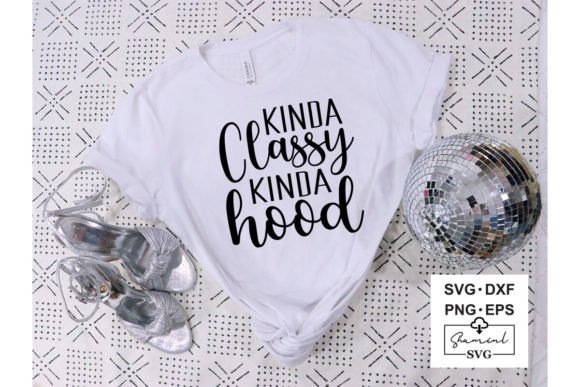
Kinda Classy Kinda Hood: Evaluating the Balance Between Refined and Casual Aesthetics
The phrase "Kinda Classy Kinda Hood" has evolved from a social media caption into a legitimate design and lifestyle descriptor. It represents a specific intersection where elevated sophistication meets grounded, authentic grit. For adults navigating home decor, fashion choices, or event planning, this aesthetic offers a solution to the binary choice between sterile perfection and chaotic casualness. Understanding this style requires looking beyond the meme to evaluate its practical application, its tradeoffs compared to traditional categories, and how to execute it without tipping too far in either direction.
Defining the Kinda Classy Kinda Hood Aesthetic
At its core, this aesthetic is defined by juxtaposition. It rejects the notion that luxury must be pristine or that comfort must be sloppy. In interior design, this might manifest as a velvet sectional paired with raw concrete floors and neon signage. In fashion, it could be a tailored blazer worn over high-quality streetwear basics. The distinction lies in intentionality; unlike eclectic styles that may feel random, the Kinda Classy Kinda Hood look relies on a deliberate tension between two opposing forces.
This approach appeals to those who value authenticity as much as refinement. Traditional "classy" aesthetics can sometimes feel performative or inaccessible, while purely "hood" or street-level aesthetics may lack the polish required for certain professional or social environments. This hybrid style bridges that gap, signaling cultural awareness and taste simultaneously. However, achieving this balance is significantly more difficult than adhering to a single design rulebook. It requires a nuanced understanding of proportion, material quality, and contextual appropriateness.
Comparing Against Traditional Design Categories
When evaluating whether this aesthetic is the right fit, it is helpful to compare it against established alternatives. Most consumers are accustomed to shopping within distinct lanes, and stepping outside them introduces new variables.
Versus Minimalist Luxury
Minimalist luxury prioritizes clean lines, neutral palettes, and uncluttered spaces. While visually calming, it often lacks personality and warmth. The Kinda Classy Kinda Hood alternative introduces texture, color, and personal narrative that minimalism avoids.
- Tradeoff: You gain character and uniqueness but lose the visual silence and easy maintenance of minimalism.
- Best Fit: Individuals who find showrooms cold and want their environment to reflect a dynamic lifestyle rather than a curated image.
- Risk: Without the strict editing rules of minimalism, spaces can quickly become visually noisy if not managed carefully.
Versus Industrial or Urban Styles
Industrial design focuses on exposed structures, metals, and utilitarian function. While it shares the "grit" component of the Kinda Classy Kinda Hood aesthetic, industrial design often lacks the softness or opulence associated with the "classy" modifier. Industrial can feel hard and echoing; the hybrid approach softens these edges with plush textiles, warm lighting, or refined finishes.
- Tradeoff: You retain the architectural honesty of industrial design but add layers of comfort that make a space livable for extended periods.
- Best Fit: Loft dwellers or creative professionals who need an inspiring backdrop that still functions as a comfortable home or welcoming venue.
- Risk: Mixing soft luxury with hard industrial elements requires careful attention to acoustics and lighting temperature to avoid a disjointed feel.
Versus Maximalism
Maximalism embraces excess, pattern mixing, and abundance. While both maximalism and the Kinda Classy Kinda Hood aesthetic reject boredom, they differ in curation. Maximalism often celebrates collection and accumulation, whereas the hybrid aesthetic is usually more restrained, focusing on specific focal points of contrast rather than overall density.
- Tradeoff: You achieve impact through contrast rather than volume, which can be easier to maintain and update over time.
- Best Fit: Those who appreciate bold statements but prefer negative space and breathing room.
- Risk: It can be mistaken for unfinished maximalism if the contrasting elements do not have strong individual merit.
Evaluating Strengths and Practical Limitations
Adopting this aesthetic is not merely a stylistic preference; it carries functional implications. Before committing resources to this direction, consider the following operational realities.
The Versatility Advantage
One of the primary strengths of the Kinda Classy Kinda Hood approach is its adaptability. Because it occupies a middle ground, it tends to age better than trend-specific micro-aesthetics. A space or wardrobe built on this foundation can transition from day to night, or from casual gathering to formal meeting, with minor adjustments. This versatility provides a higher return on investment for items that serve dual purposes, such as a structured leather jacket that works in both boardrooms and bars, or furniture that looks intentional in both relaxed and formal settings.
The Execution Challenge
The most significant limitation is the difficulty of execution. When you follow a established style guide, there are safety rails. When you blend opposing aesthetics, those rails disappear. A common failure point is using low-quality items in an attempt to capture the "hood" aspect, which inadvertently makes the "classy" elements look cheap. Conversely, using overly ornate classic pieces can make the casual elements look like mistakes rather than choices. Success depends entirely on the quality of individual components and the confidence of the arrangement.
Maintenance and Perception
This aesthetic often utilizes materials that require different care regimens. Maintaining pristine white sneakers alongside vintage denim, or keeping brass fixtures polished next to matte black steel, demands more active upkeep than a uniform style. Furthermore, perception varies wildly by audience. What reads as culturally fluent and sophisticated to one demographic may read as confused or inappropriate to another. Contextual awareness is non-negotiable; this style thrives in creative, urban, or progressive environments but may face friction in conservative corporate or traditional social settings.
Decision Factors: When to Choose This Approach
Determining if the Kinda Classy Kinda Hood aesthetic is the correct choice involves honest self-assessment regarding lifestyle, budget, and tolerance for ambiguity.
Budget Allocation Strategy
This style rarely works well on a shoestring budget because the contrast relies on quality. If funds are limited, it is often better to commit fully to a simpler, cohesive aesthetic than to attempt a high-contrast hybrid with inferior materials. However, for those with moderate to flexible budgets, this approach allows for strategic splurging. You might invest heavily in one anchor piece of luxury while sourcing authentic, lower-cost vintage or street items to provide counterbalance. This mix-and-match economics can actually stretch a budget further than buying all-new luxury goods, provided you have the eye to identify value in non-traditional sources.
Lifestyle Compatibility
Consider your daily reality. If your life is highly segmented—requiring strict formality at work and complete relaxation at home—maintaining a hybrid aesthetic might feel exhausting. This style works best for those whose lives are integrated, where creativity, socializing, and work overlap. It is particularly effective for entrepreneurs, creatives, and hosts who use their personal space or appearance as an extension of their brand identity. If you frequently entertain diverse groups of people, this aesthetic acts as a social lubricant, making guests from various backgrounds feel simultaneously impressed and at ease.
Tolerance for Curation
Unlike catalog shopping, building a Kinda Classy Kinda Hood environment is an ongoing process of curation. It involves hunting for specific pieces that bridge the gap, testing combinations, and editing ruthlessly. If you prefer a "set it and forget it" approach to design or dressing, this is likely not the right path. However, if you view your environment as a creative project and enjoy the process of refining a unique vision, the effort yields a result that is deeply personal and impossible to replicate.
Making an Informed Choice
Ultimately, the decision to embrace the Kinda Classy Kinda Hood aesthetic should be driven by a desire for authentic expression rather than trend adherence. It is a powerful tool for those who refuse to choose between aspiration and origin, offering a way to honor both simultaneously. By weighing the increased demand for curation and quality against the benefits of versatility and distinctiveness, you can determine if this balanced approach aligns with your long-term goals. Whether applied to a living room, a wardrobe, or a business venue, success lies in respecting the integrity of both halves of the equation, ensuring that neither the class nor the hood feels like a costume, but rather a cohesive reflection of a multifaceted identity.